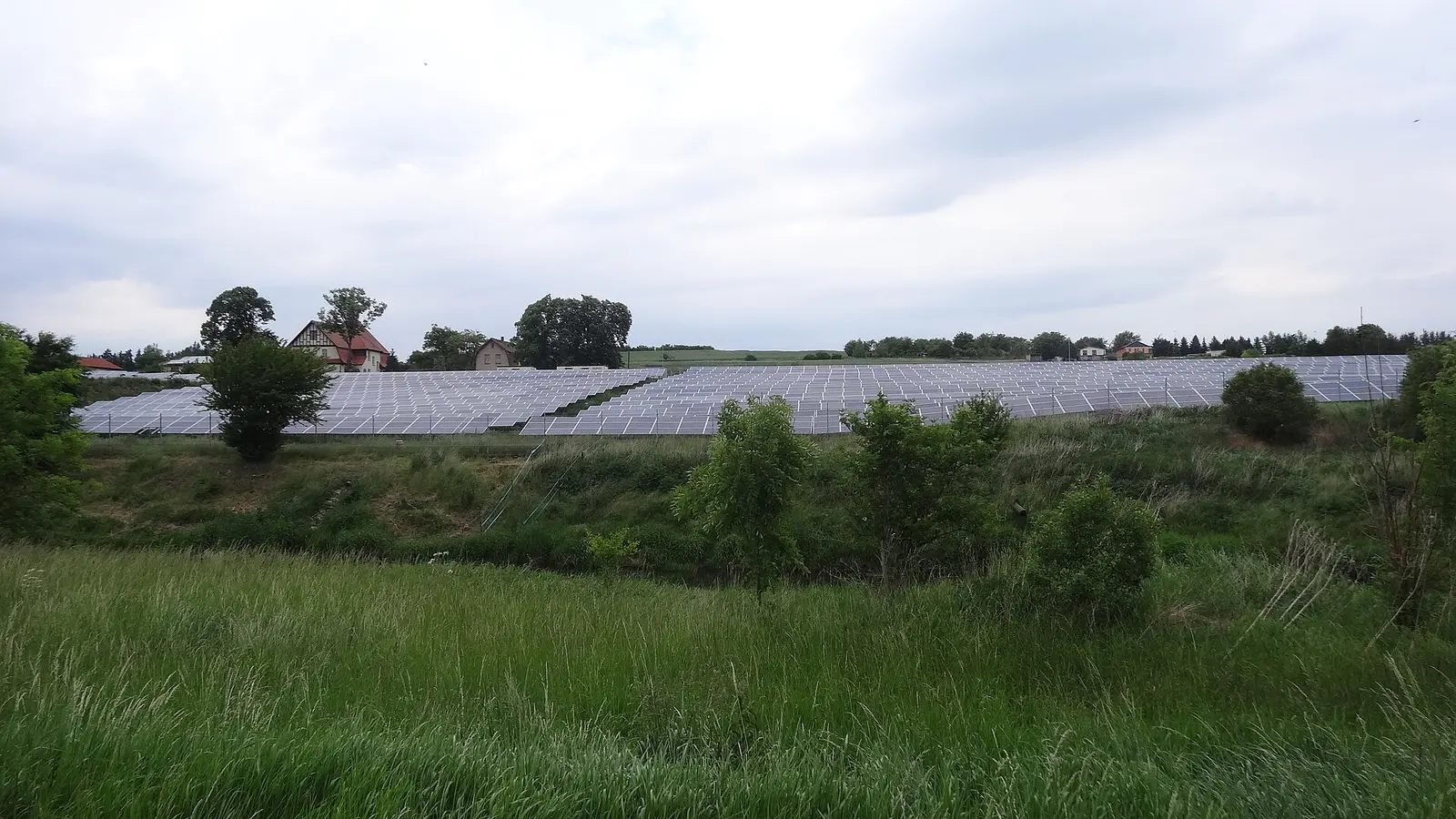
Two terawatts installed globally: a figure of structural significance
At the end of 2024, global cumulative installed photovoltaic capacity surpassed 2 terawatts (2,000 GW). The entire nuclear capacity installed worldwide — built over seven decades — stands at around 395 GW. In the European Union, 2024 marked the first year in which energy produced from solar and wind sources exceeded the total output from all fossil-fuel sources. The savings generated by replacing imported natural gas with local solar production were estimated at around EUR 12.8 billion.
The cost trajectory: a 90% reduction in 15 years
In 2010, the levelized cost of photovoltaic energy (LCOE) was around USD 350-400/MWh. In 2025, the LCOE for a utility-scale solar system in Europe ranges between EUR 25 and 45/MWh — a reduction of more than 90% in 15 years, unprecedented in the history of the energy industry. The efficiency of commercial cells rose from around 15% in 2010 to 20-30% today (PERC/TOPCon technologies). The reduction resulted from an increase in production scale, investment in research and development, and competition among global manufacturers.
Distributed architecture: the system reconfigures from the bottom up
The fundamental change brought by photovoltaics is architectural, not merely economic. The traditional energy model — a few large power plants, long-distance transmission networks, passive consumers — is being progressively replaced by a model in which production takes place at the building and community level, storage is local, and the national grid becomes a balancing instrument. A prosumer with 6 kWp installed and a 10 kWh battery covers, on average, 60-80% of annual consumption in an area with sufficient irradiance.
Technical limits and research directions
Expanding the share of photovoltaics beyond roughly 30-40% of a national system's annual output without adequate storage generates real instabilities: uncontrollable midday surpluses (the duck curve phenomenon), evening deficits, and pressure on frequency and on balancing capacities. The technical solution is storage at sufficient scale. Smart investment in photovoltaics today is no longer about the installation cost — it is about the capability to monetize production in a market with midday oversupply.